Food Science Education Publications and Websites
0 Comments Published by jab on August 29, 2006 at 08:55.

Food Science teachers! The Journal of Food Science Education of Blackwell Synergy has been published with a new column of innovative teaching/educating methods/materials.
LaBorde LF. (last update 2/24/2006). Food science experiments and learning opportunities for students of all ages. Dept. of Food Science, College of Agricultural Sciences, Penn State Univ. Available at http://www.foodscience.psu.edu/outreach/fun_food_science.html (accessed 5/17/2006)
A briefly annotated list of web links to food science experiments and activities for elementary through college students, as well as links for teachers. This site was developed and is maintained by Dr. Luke LaBorde, Dept. of Food Science, Penn State Univ.
Lo YM, Fukushima K, Rippen TE, Gdovin SL, and Hahm T-S. 2004. Active assessment for HAACP training: Integrating pedagogical reasoning with primary trait analysis. J Extension 42(6). Available at http://www.joe.org/joe/2004december/iw4.shtml (accessed 5/17/2006)
The authors describe an interactive HAACP training program developed at the Univ. of Maryland. The training uses a pedagogical reasoning model and Primary Trait Analysis to design an effective HAACP training program and to access student performance. In this brief paper, the authors present the traits used in designing their problem scenarios as well as the grading criteria used for their ending student interviews.
Martindale's The "Virtual" Nutrition Center. Courses, tutorials & databases. Section 1 anatomy to nutrition. Developed and maintained by Jim Martindale. Available at http://www.martindalecenter.com/Nutrition_3_AnNut.html (accessed 5/17/2006)
This site, in operation since 1994, offers a wealth of Internet resources for the food science professional. Click on "Food Chemistry Courses" to find online course material from a variety of university food science departments including pdfs of lectures, readings, and charts and diagrams. Continuing down the page, the user will find teaching modules, food chemistry calculations and modeling information, laboratory methods and experiments, microbiological analysis of foods, and sites on flavors, tastes, and smells.
Shanley EL, Thompson CA, Leuchner LA, and Zhao Y. 2004. Distance education is as effective as traditional education when teaching food safety. Food Service Technol 4(1):1–8.
The authors describe a food safety and sanitation course at the Univ. of Connecticut that was presented in a classroom setting as well as via cd-rom and the Internet. The students were school food service directors who could select the course venue. A fairly detailed table presents the objectives of each of the 8 lessons taught. No significant difference was found in the scores on a nationally recognized food safety examination taken by participants in each group. Information on the distance education course can be found at http://www.team.uconn.edu/foodsafety_course/index.htm.
Sigmann SB and Wheeler DE. 2004. The quantitative determination of food dyes in powered drink mixes—a high school of general science experiment. J Chem Ed 81(10):1475–78.
Using a centrifuge, an analytical balance, and a spectrophotometer, the authors describe an experiment to analyze the absorbance and percent by mass of 3 food dyes in several Kool-Aid flavored drinks. A table compares the authors' and students' results for percent of mass. The authors note that verification of the results is not possible because dye quantity is proprietary. Supplementary information is available in the online issue of Journal of Chemical Education, for which a paid subscription is required.
Sigmann SB and Wheeler DE. 2004. Quantitative determination of citric and ascorbic acid in powered drink mixes—a high school of general science experiment. J Chem Ed 81(10):1479–81.
The authors detail their experiment to "… quantitatively determine: first, the amount of total acid; second, the amount of ascorbic acid; and lastly, the amount of citric acid in a given sample of powered drink mix" (p. 1479). As in their experiment to determine food dyes listed above, the authors used Kool-Aid flavored drink mixes. The authors present both their own results and those of the students. The authors note that because this is proprietary information "… percent error for the experimental masses cannot be reported" (p. 1480). Supplementary information is available in the online issue of Journal of Chemical Education, for which a paid subscription is required.
Journal of Food Science Education
Volume 5 Page 41 - July 2006
--------------------------------------------------------------------------------
Article published online 02 Aug 2006
To cite this article
Bird, Jim (2006)
Food Science Education Publications and Websites.
Journal of Food Science Education 5 (3), 41-42.
doi: 10.1111/
j.1541-4329.2006.00002.x
-------------------------------------------------------------------------------- Read more!
With this issue of the Journal of Food Science Education we inaugurate a new column that will offer brief overviews of current print and nonprint publications that present innovative ways to teach and/or evaluate food science subjects. In each issue we will review up to 10 publications published or updated within the last 2 years. We invite readers to submit print or electronic resources that they would like to share with other readers. Please submit the full text of the article or the URL for the website and an annotation of not more than 100 words. We hope that this column becomes, over time, a clearinghouse for innovative teaching tools and methods. We welcome your comments and resources. Material should be submitted to: Jim Bird, Science & Engineering Center, Fogler Library, Univ. of Maine, Orono, ME 04469 or e-mailed to Jim.Bird@umit.maine.edu.
LaBorde LF. (last update 2/24/2006). Food science experiments and learning opportunities for students of all ages. Dept. of Food Science, College of Agricultural Sciences, Penn State Univ. Available at http://www.foodscience.psu.edu/outreach/fun_food_science.html (accessed 5/17/2006)
A briefly annotated list of web links to food science experiments and activities for elementary through college students, as well as links for teachers. This site was developed and is maintained by Dr. Luke LaBorde, Dept. of Food Science, Penn State Univ.
Lo YM, Fukushima K, Rippen TE, Gdovin SL, and Hahm T-S. 2004. Active assessment for HAACP training: Integrating pedagogical reasoning with primary trait analysis. J Extension 42(6). Available at http://www.joe.org/joe/2004december/iw4.shtml (accessed 5/17/2006)
The authors describe an interactive HAACP training program developed at the Univ. of Maryland. The training uses a pedagogical reasoning model and Primary Trait Analysis to design an effective HAACP training program and to access student performance. In this brief paper, the authors present the traits used in designing their problem scenarios as well as the grading criteria used for their ending student interviews.
Martindale's The "Virtual" Nutrition Center. Courses, tutorials & databases. Section 1 anatomy to nutrition. Developed and maintained by Jim Martindale. Available at http://www.martindalecenter.com/Nutrition_3_AnNut.html (accessed 5/17/2006)
This site, in operation since 1994, offers a wealth of Internet resources for the food science professional. Click on "Food Chemistry Courses" to find online course material from a variety of university food science departments including pdfs of lectures, readings, and charts and diagrams. Continuing down the page, the user will find teaching modules, food chemistry calculations and modeling information, laboratory methods and experiments, microbiological analysis of foods, and sites on flavors, tastes, and smells.
Shanley EL, Thompson CA, Leuchner LA, and Zhao Y. 2004. Distance education is as effective as traditional education when teaching food safety. Food Service Technol 4(1):1–8.
The authors describe a food safety and sanitation course at the Univ. of Connecticut that was presented in a classroom setting as well as via cd-rom and the Internet. The students were school food service directors who could select the course venue. A fairly detailed table presents the objectives of each of the 8 lessons taught. No significant difference was found in the scores on a nationally recognized food safety examination taken by participants in each group. Information on the distance education course can be found at http://www.team.uconn.edu/foodsafety_course/index.htm.
Sigmann SB and Wheeler DE. 2004. The quantitative determination of food dyes in powered drink mixes—a high school of general science experiment. J Chem Ed 81(10):1475–78.
Using a centrifuge, an analytical balance, and a spectrophotometer, the authors describe an experiment to analyze the absorbance and percent by mass of 3 food dyes in several Kool-Aid flavored drinks. A table compares the authors' and students' results for percent of mass. The authors note that verification of the results is not possible because dye quantity is proprietary. Supplementary information is available in the online issue of Journal of Chemical Education, for which a paid subscription is required.
Sigmann SB and Wheeler DE. 2004. Quantitative determination of citric and ascorbic acid in powered drink mixes—a high school of general science experiment. J Chem Ed 81(10):1479–81.
The authors detail their experiment to "… quantitatively determine: first, the amount of total acid; second, the amount of ascorbic acid; and lastly, the amount of citric acid in a given sample of powered drink mix" (p. 1479). As in their experiment to determine food dyes listed above, the authors used Kool-Aid flavored drink mixes. The authors present both their own results and those of the students. The authors note that because this is proprietary information "… percent error for the experimental masses cannot be reported" (p. 1480). Supplementary information is available in the online issue of Journal of Chemical Education, for which a paid subscription is required.
Journal of Food Science Education
Volume 5 Page 41 - July 2006
--------------------------------------------------------------------------------
Article published online 02 Aug 2006
To cite this article
Bird, Jim (2006)
Food Science Education Publications and Websites.
Journal of Food Science Education 5 (3), 41-42.
doi: 10.1111/
j.1541-4329.2006.00002.x
-------------------------------------------------------------------------------- Read more!
 It is an interesting and a very old idea of preventing people from certain pathogens. I'd like to notice that this method will not prevent food from spoilage - as few sources suggested. Bacteriophages will only kill the target flora - in this case Listeria monocytogenes; the microbes causing food spoilage will not be affected.
As an expert in food microbiology I would rather eat bacteriophages than antibiotics or other "chemical weapons".
The press release:
A mix of bacteria-killing viruses can be safely sprayed on cold cuts, hot dogs and sausages to combat common microbes that kill hundreds of people a year, federal health officials said Friday in granting the first-ever approval of viruses as a food additive.
The combination of six viruses is designed to be sprayed on ready-to-eat meat and poultry products, including sliced ham and turkey, said John Vazzana, president and chief executive officer of manufacturer Intralytix Inc.
The special viruses, called bacteriophages, are meant to kill strains of the Listeria monocytogenes bacterium, the Food and Drug Administration said in declaring it safe to use on ready-to-eat meats prior to their packaging.
The viruses are the first to win FDA approval for use as a food additive, said Andrew Zajac, of the regulatory agency's office of food additive safety.
Luncheon meats are particularly vulnerable to L. monocytogenes since once purchased they typically aren't cooked or reheated, which can kill harmful bacteria like Listeria, Zajac said.
The preparation of bacteriophages attacks only strains of the Listeria bacterium and not human or plant cells, the FDA said.
As long as it used in accordance with the regulations, we have concluded it's safeZajac said. People normally come into contact with phages through food, water and the environment, and they are found in our digestive tracts, the FDA said.
Consumers won't be aware that meat and poultry products have been treated with the spray, Zajac added. The Department of Agriculture will regulate the actual use of the product.
The viruses are grown in a preparation of the very bacteria they kill, and then purified. The FDA had concerns that the virus preparation potentially could contain toxic residues associated with the bacteria. However, testing did not reveal the presence of such residues, which in small quantities likely wouldn't cause health problems anyway, the FDA said.
"The FDA is applying one of the toughest food-safety standards which they have to find this is safe," said Caroline Smith DeWaal, director of food safety for the Center for Science in the Public Interest, a consumer advocacy group. "They couldn't approve this product if they had questions about its safety."
Intralytix, based in Baltimore, first petitioned the FDA in 2002 to allow the viruses to be used as a food additive. It has since licensed the product to a multinational company, which intends to market it worldwide, said Intralytix president Vazzana. He declined to name the company but said he expected it to announce its plans within weeks or months.
Intralytix also plans to seek FDA approval for another bacteriophage product to kill E. coli bacteria on beef before it is ground, Vazzana said.
Scientists have long studied bacteriophages as a bacteria-fighting alternative to antibiotics. Read more!
This manual provides basic and essential information on freezing technology to preserve fruits and vegetables in small-scale operations. Practical examples demonstrating the application of the technology are given to provide a better understanding of the processes.
Freezing is the most widely used method of food preservation permitting retention of quality of the products during long periods of storage. Compared to other conventional methods used in the storage of fruits and vegetables, freezing is the most satisfactory method in terms of quality, process and overall cost. Currently, the frozen food market is one the largest sectors in the food industry. Industrialized countries dominate the trade in frozen food commodities, but developing countries can also develop their own frozen food industries. Introduction of adequate freezing technology, based on a better understanding of the technical and practical processes, is essential to meet the growing consumer demand for frozen foods in developing countries.
Download the manual! Read more!
Freezing is the most widely used method of food preservation permitting retention of quality of the products during long periods of storage. Compared to other conventional methods used in the storage of fruits and vegetables, freezing is the most satisfactory method in terms of quality, process and overall cost. Currently, the frozen food market is one the largest sectors in the food industry. Industrialized countries dominate the trade in frozen food commodities, but developing countries can also develop their own frozen food industries. Introduction of adequate freezing technology, based on a better understanding of the technical and practical processes, is essential to meet the growing consumer demand for frozen foods in developing countries.
Download the manual! Read more!
The Codex Alimentarius Commission, which ended its latest session on 7 July, adopted new standards on the maximum allowable levels of a number of key contaminants and food additives in order to protect the health of consumers.
The standards set the maximum allowable amounts of contaminants such as lead and cadmium in certain foods. Additionally, newly adopted codes of practice will give guidance to governments on how to prevent and reduce dioxins and aflatoxins in food.
Moreover, many of the standards adopted will contribute to greater choice for consumers, as the establishment of international standards for several milk-based products and for instant noodles, for example, will facilitate their international trade and enable them to reach consumers worldwide.
"This has been an extraordinarily productive session, attended by a record number of 110 countries and approximately 400 delegates. The attendance of 24 countries was supported by the Codex trust fund," said Claude Mosha of Tanzania, Chairperson of the Codex Commission.
"We have passed a range of standards which will make a substantial difference in the safety and quality of the food people eat. In addition, people in developing countries will have the ability to earn better livings through trading these foods internationally," he added.
Protecting consumers' health was a major theme of the standards adopted. The contaminants considered during this session have considerable health impacts.
Lead can cause a wide range of disorders, including anaemia and hepatic and neurological disorders and food can be a major route of exposure. Cadmium can provoke kidney damage after long periods of exposure. Aflatoxins cause liver cancer and dioxins and dioxin-like polychlorinated biphenyls (PCBs) are both highly toxic as well as carcinogenic.
The new standards adopted will go a long way towards protecting human health, as they set out new, maximum limits for lead in fish, cadmium in rice, marine bivalve molluscs and cephalopods. New codes of practice for reducing aflatoxin contamination in Brazil nuts, and dioxin and dioxin-like PCB contamination in food and feed will help countries take measures to protect consumers from exposure to these substances.
Task force on antimicrobial resistance
Codex also created a Task Force to address the issue of antimicrobial resistance in food of animal origin. This Task Force will have a mandate to develop risk assessment policies and strategies to reduce food safety risks associated with certain uses of antimicrobials in animal production, including aquaculture.
The Commission further addressed several organizational issues during the week-long session. It split the existing Codex Committee on Food Additives and Contaminants because of its large workload and created two new specialized committees, the Codex Committee on Food Additives and the Codex Committee on Contaminants in Food.
China was designated by the membership as host of the Food Additives Committee, and also of the Committee on Pesticide Residues, while the Netherlands was designated as host to the Committee on Contaminants in Food.
Mr Claude J S Mosha (Tanzania) was re-elected as the Chairperson of the Commission. Ms Karen Hulebak (United States), Ms Noraini M Othman (Malaysia) and Mr Wim Van Eck (Netherlands) were re-elected as the Commission's three Vice-Chairpersons.
The Commission currently meets once a year to review and eventually adopt international food standards, guidelines and recommendations developed by its network of 21 specialist committees that address technical issues associated with these texts. It meets in alternate years in Rome and Geneva.
The excellent attendance rate at the last session enabled the Commission to reach a quorum and to pass important changes to its rules of procedure as part of the reform process.
"Codex is one of the best examples where an international forum with parallel objectives of promoting public health and food trade can achieve win-win solutions through negotiations based on sound science and conducted in the spirit of cooperation," commented Mr Mosha.
The Codex Alimentarius Commission is the international food standards setting body of the United Nations, a joint venture of the FAO and the World Health Organization (WHO). It is the longest-standing example of interagency cooperation in the UN system. It has 173 Member States and one Member Organization (the European Community). Read more!
The standards set the maximum allowable amounts of contaminants such as lead and cadmium in certain foods. Additionally, newly adopted codes of practice will give guidance to governments on how to prevent and reduce dioxins and aflatoxins in food.
Moreover, many of the standards adopted will contribute to greater choice for consumers, as the establishment of international standards for several milk-based products and for instant noodles, for example, will facilitate their international trade and enable them to reach consumers worldwide.
"This has been an extraordinarily productive session, attended by a record number of 110 countries and approximately 400 delegates. The attendance of 24 countries was supported by the Codex trust fund," said Claude Mosha of Tanzania, Chairperson of the Codex Commission.
"We have passed a range of standards which will make a substantial difference in the safety and quality of the food people eat. In addition, people in developing countries will have the ability to earn better livings through trading these foods internationally," he added.
Protecting consumers' health was a major theme of the standards adopted. The contaminants considered during this session have considerable health impacts.
Lead can cause a wide range of disorders, including anaemia and hepatic and neurological disorders and food can be a major route of exposure. Cadmium can provoke kidney damage after long periods of exposure. Aflatoxins cause liver cancer and dioxins and dioxin-like polychlorinated biphenyls (PCBs) are both highly toxic as well as carcinogenic.
The new standards adopted will go a long way towards protecting human health, as they set out new, maximum limits for lead in fish, cadmium in rice, marine bivalve molluscs and cephalopods. New codes of practice for reducing aflatoxin contamination in Brazil nuts, and dioxin and dioxin-like PCB contamination in food and feed will help countries take measures to protect consumers from exposure to these substances.
Task force on antimicrobial resistance
Codex also created a Task Force to address the issue of antimicrobial resistance in food of animal origin. This Task Force will have a mandate to develop risk assessment policies and strategies to reduce food safety risks associated with certain uses of antimicrobials in animal production, including aquaculture.
The Commission further addressed several organizational issues during the week-long session. It split the existing Codex Committee on Food Additives and Contaminants because of its large workload and created two new specialized committees, the Codex Committee on Food Additives and the Codex Committee on Contaminants in Food.
China was designated by the membership as host of the Food Additives Committee, and also of the Committee on Pesticide Residues, while the Netherlands was designated as host to the Committee on Contaminants in Food.
Mr Claude J S Mosha (Tanzania) was re-elected as the Chairperson of the Commission. Ms Karen Hulebak (United States), Ms Noraini M Othman (Malaysia) and Mr Wim Van Eck (Netherlands) were re-elected as the Commission's three Vice-Chairpersons.
The Commission currently meets once a year to review and eventually adopt international food standards, guidelines and recommendations developed by its network of 21 specialist committees that address technical issues associated with these texts. It meets in alternate years in Rome and Geneva.
The excellent attendance rate at the last session enabled the Commission to reach a quorum and to pass important changes to its rules of procedure as part of the reform process.
"Codex is one of the best examples where an international forum with parallel objectives of promoting public health and food trade can achieve win-win solutions through negotiations based on sound science and conducted in the spirit of cooperation," commented Mr Mosha.
The Codex Alimentarius Commission is the international food standards setting body of the United Nations, a joint venture of the FAO and the World Health Organization (WHO). It is the longest-standing example of interagency cooperation in the UN system. It has 173 Member States and one Member Organization (the European Community). Read more!
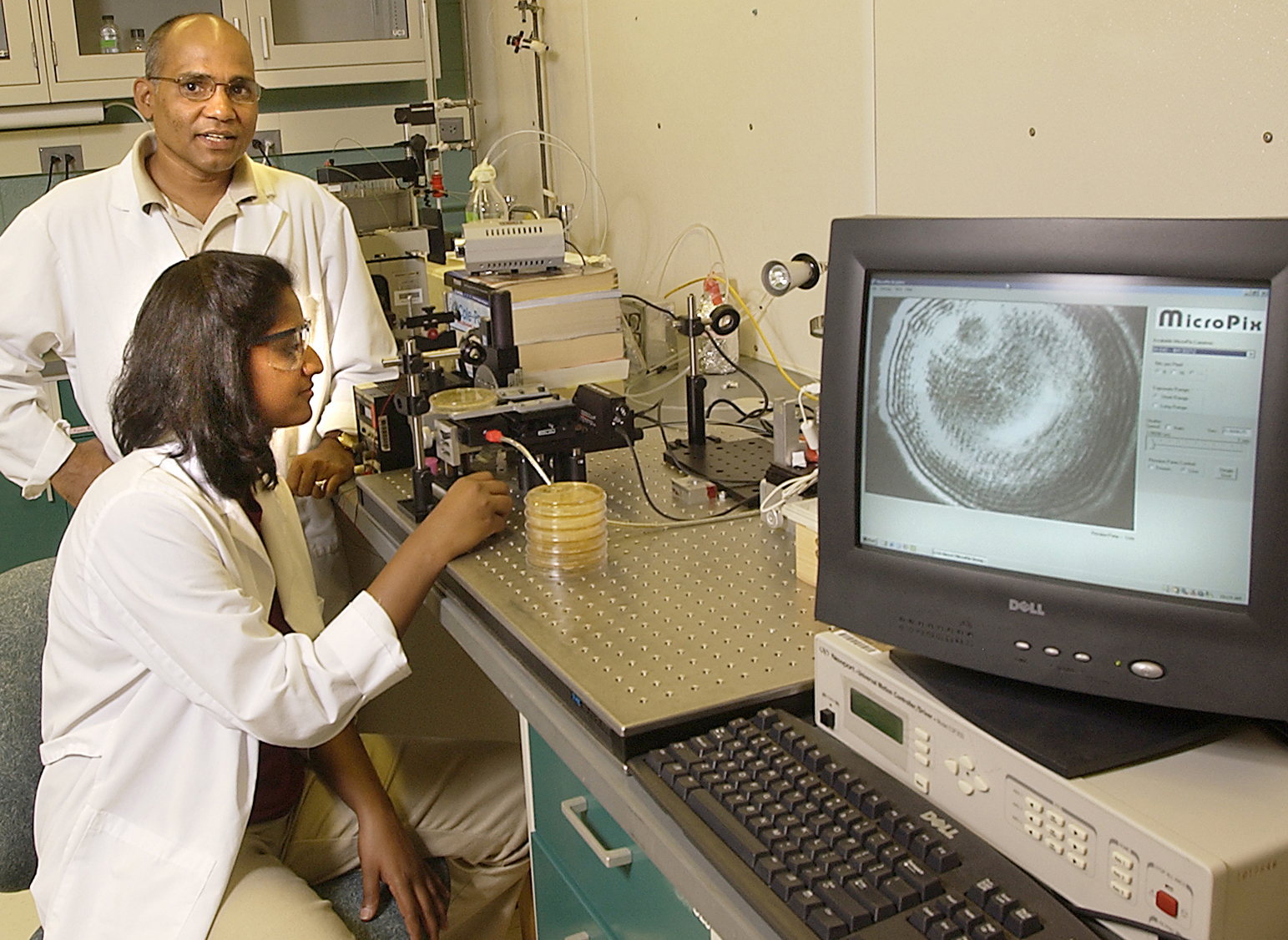 Researchers at Purdue University have developed a new low-cost system that analyzes scattered laser light to quickly identify bacteria for applications in medicine, food processing and homeland security at one-tenth the cost of conventional technologies.
 The technique - Bacteria Rapid Detection Using Optical Scattering Technology - works by shining a laser through a petri dish containing bacterial colonies growing in a nutrient medium.
"Unlike conventional methods, we don't have to do any biochemical staining, DNA analysis or other types of manipulation," said Bartek Rajwa, a staff scientist at the Bindley Bioscience Center in Purdue's Discovery Park, the university's hub for interdisciplinary research.
Particles of light, called photons, bounce off of the colony, and the pattern of scattered light is projected onto a screen behind the petri dish. This "light-scatter pattern" is recorded with a digital camera and analyzed with sophisticated software to identify the types of bacteria growing in colonies.
"There are potentially thousands of applications for this new technology, from identifying stem cells to drug-resistant staph infections to pathogens on the battlefield." said J. Paul Robinson, a researcher at the Bindley Center and a professor in the Weldon School of Biomedical Engineering and the School of Veterinary Medicine.
The work was initiated by Arun Bhunia, a professor of food microbiology in the Department of Food Science; and E. Daniel Hirleman, a professor and William E. and Florence E. Perry Head of Purdue's School of Mechanical Engineering. Findings are detailed in a research paper appearing this month in the Journal of Biomedical Optics.
Hirleman has specialized in research to develop new types of sensors that work by analyzing light scattering off objects for applications such as detecting impurities on silicon wafers in computer chip manufacturing and measuring the size and speed of fuel droplets in jet engines.
"We adapted some ideas from that research to build a scatterometer for food safety, and now we're using the second generation of that instrument," Hirleman said.
A major motivation for the research is to reduce the time it takes for industry to identify harmful organisms in food processing. Scientists in food-processing plants routinely grow cultures to test for dangerous pathogens.
"The dairy industry, for example, grows bacteria on petri dishes to make sure products are safe, but industry is trying to develop technologies that will very quickly identify organisms," Robinson said. "The same sort of thing holds true for clinical microbiology and other laboratories. With our light-scattering method, it takes less than five minutes to identify harmful organisms after they have grown in a petri dish. The analysis is faster than any other methods in existence, and it's simple."
The technique might be used to identify staph infections that are resistant to antibiotics.
"This is an extremely dangerous infection, and you want to catch it as early as possible," Robinson said.
A mass-produced system based on the technology would consist of inexpensive, off-the-shelf hardware, such as red lasers and low-resolution digital cameras available at consumer electronics stores, and likely would cost less than $1,000, Hirleman said.
A critical part of the technique was made possible by adapting a mathematical method created in 1934 by Dutch physicist Fritz Zernike, who created a set of mathematical "descriptors" subsequently called radial Zernike polynomials. These descriptors can be used to analyze how light-wave patterns are distorted after passing through lenses having complex flaws or aberrations.
Individual bacterial colonies growing in a petri dish also distort light passing through them, just as a lens changes light-wave patterns.
"Therefore, we can treat the colonies as lenses and use Zernike polynomials," Rajwa said.
Factors such as the shape of bacteria, their refractive indexes - or how much they bend light - the types of substances secreted by a particular bacterium and the distance between individual bacteria in a colony, all contribute to how a colony distorts light. The procedure identifies a bacterial colony by comparing an image of its scatter pattern against a template that contains 120 features described by Zernike polynomials.
"A good analogy is the method used by law enforcement to identify a person's face using specialized recognition software," Rajwa said. "You could describe the face as being made up of a combination of geometric shapes, like ovals, squares and triangles, but each face has a unique blend of these shapes. We did something similar. We reduced complicated scatter patterns to 120 numbers based on Zernike polynomials."
This reduced collection of numbers describes how well the colony fits the template, and then pattern recognition software is used to classify the bacteria.
"One of the most important developments is being able to convert images to numbers, which makes it possible to classify the patterns," Rajwa said. "We are able to take images and convert them to numbers that uniquely describe every picture."
The researchers used the new system to classify six species of listeria, only one of which is a dangerous food-borne pathogen for humans.
"If you have a mixture of different listeria, you would like to know which is the one that can kill you," Rajwa said. "We took pictures of the scatter patterns from different listeria, and we were able to classify all of them accurately."
The system also was able to accurately identify other types of bacterial colonies, including salmonella, vibrio, E. coli and bacillus.
"We were able to classify bacterial colonies with greater than a 90 percent probability of being correct, which is as good as you could do with equipment costing more than $100,000, " Rajwa said. "And, unlike conventional systems, our method is 100 percent non-invasive, which means we can carry out the procedure without staining, manipulating or killing the biological samples.
"The power of this technology is that it does not require complicated lab equipment, and it could be designed so that it wouldn't require someone with a doctoral degree to operate. The whole beauty of the system is you don't invade the biological environment that you want to measure," Rajwa said. "If you are working with stem cells, you don't want to stain them to see if they are stem cells. You want to be able to look at colonies on a petri dish without touching the colonies, without staining or destroying the colonies."
The research has recently received funding from the U.S. Department of Agriculture through Purdue's Center for Food Safety Engineering.
Further work will include research to develop a graphical user interface.
"Now it requires a qualified, trained person to do all the recognition," Rajwa said. "We want a system where you can actually put a petri dish or some other container into the system, you press enter and the computer says, 'This is salmonella of this type and this strain, ' and it does this quickly in real time. There is absolutely no fundamental reason why we wouldn't be able to do this, and we are pretty close to having an actual prototype of a product that could be commercialized."
A provisional patent has been filed for the data-processing technique, and a full patent application has been filed on the underlying light-scattering technology.
The paper published in the Journal of Biomedical Optics was written by Bulent Bayraktar, a postdoctoral researcher working with Robinson; Padmapriya P. Banada, a postdoctoral researcher in the Department of Food Science; Hirleman, Bhunia, Robinson and Rajwa.
Related Web sites:
J. Paul Robinson
Arun Bhunia
E. Daniel Hirleman
Abstract on the research in this release is available here. Read more!


